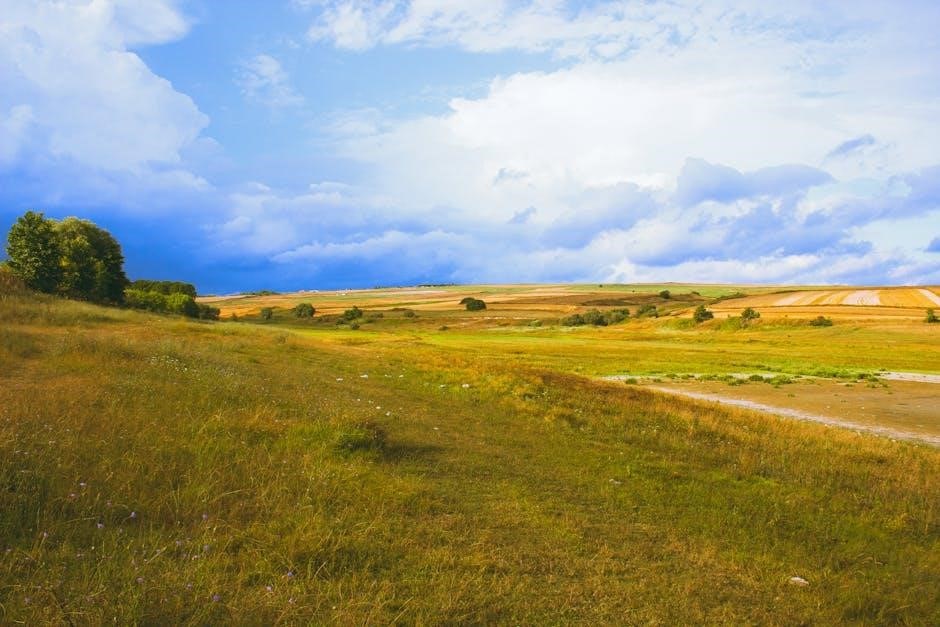
Köppen’s system, detailed in numerous PDF resources, revolutionized climate study. It categorizes climates based on temperature and precipitation patterns, offering a globally recognized framework for analysis;
Historical Context of the Köppen System
Vladimir Köppen, a Russian-German climatologist, initially developed the system in 1884, refining it over decades. His early work focused on vegetation zones, recognizing a direct link between climate and plant life. Later PDF documents detail his shift towards a more empirical, observation-based approach.
Köppen’s classification, published in 1900 and subsequently updated, aimed to provide a practical tool for understanding global climate patterns. It gained prominence as geographical and ecological studies expanded, becoming a standard in climate research. Numerous PDF guides now illustrate its evolution and enduring relevance.
Importance of Climate Classification
Climate classification, particularly using the Köppen system detailed in accessible PDF guides, is crucial for diverse fields. It aids in understanding global weather patterns, predicting environmental changes, and assessing potential impacts on ecosystems.
The Köppen system, readily available in comprehensive PDF reports, supports agricultural planning, infrastructure development, and resource management. It allows for informed decision-making regarding land use, water resources, and disaster preparedness. Furthermore, it provides a standardized framework for comparing climates across different regions.
Key Concepts in the Köppen System
The Köppen system, explained in detailed PDF documents, centers on temperature and precipitation. These factors define climate groups, influencing regional characteristics and ecosystems.
Temperature Zones: A, B, C, D, and E
Köppen’s temperature zones, thoroughly outlined in accessible PDF guides, are fundamental to understanding global climate patterns. Zone A represents tropical climates, consistently warm with high temperatures year-round. B denotes arid climates, characterized by low precipitation. C signifies temperate climates, featuring moderate temperatures and distinct seasons. D indicates continental climates, experiencing significant seasonal temperature variations and warm to cool summers. Finally, E represents polar climates, with consistently cold temperatures and limited warmth.
These zones, detailed in various PDF resources, are determined by average temperatures during the warmest and coldest months, providing a clear framework for climate categorization.
Precipitation Categories: f, m, p, s, and w
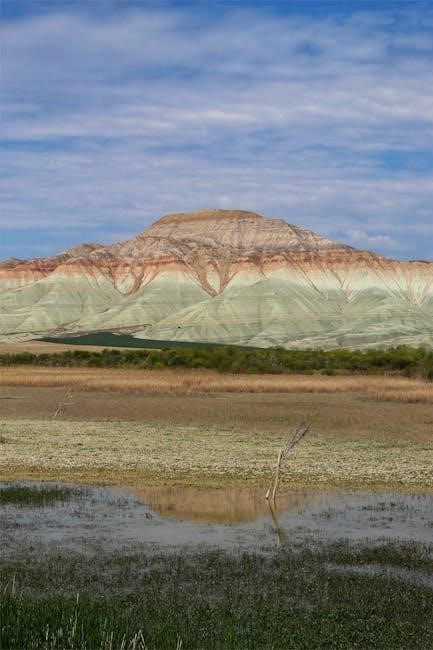
Köppen’s precipitation categories, comprehensively explained in numerous PDF documents, define the distribution of rainfall throughout the year. ‘f’ signifies consistently moist climates with rainfall in all months. ‘m’ denotes monsoon climates, with a distinct wet season. ‘p’ represents climates with predictable seasonal precipitation patterns. ‘s’ indicates steppe climates, characterized by limited rainfall. Lastly, ‘w’ signifies desert climates, experiencing extremely dry conditions.
These classifications, readily available in PDF format, are crucial for understanding regional climate characteristics and their impact on ecosystems.
The Role of Seasonal Precipitation
Seasonal precipitation is a cornerstone of the Köppen climate classification, thoroughly detailed in accessible PDF guides. The timing and concentration of rainfall significantly influence vegetation, agriculture, and overall ecosystem dynamics. Köppen’s system analyzes whether precipitation is evenly distributed or concentrated in specific seasons.
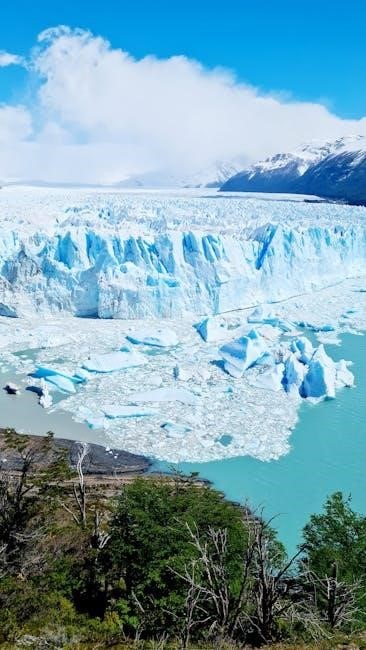
Understanding these patterns, as outlined in various PDF resources, allows for accurate climate categorization. This seasonal aspect differentiates between, for example, a tropical rainforest (consistent rainfall) and a savanna (distinct wet and dry seasons).
Detailed Breakdown of Climate Types
Comprehensive PDF documents meticulously outline each climate type within the Köppen system, detailing temperature, precipitation, and characteristic regional variations for in-depth study.
Tropical Climates (A)
Detailed PDF guides thoroughly explore Tropical Climates (A), characterized by high temperatures year-round and significant precipitation. These climates, found near the equator, are subdivided into Af (Tropical Rainforest), Am (Tropical Monsoon), and Aw (Tropical Savanna) based on precipitation patterns.
PDF resources illustrate the consistent high temperatures, typically exceeding 18°C, and abundant rainfall, often exceeding 2000mm annually, in Af climates. Am climates exhibit a pronounced monsoon season, while Aw climates feature distinct wet and dry seasons. These PDFs often include climate graphs and maps showcasing the geographical distribution of each subtype, aiding in comprehensive understanding.
Af ⎯ Tropical Rainforest Climate
Comprehensive PDF documents detail the Af climate – Tropical Rainforest – as consistently hot and wet throughout the year. These regions, typically near the equator, experience minimal temperature variation, averaging above 18°C. Rainfall exceeds 2000mm annually, distributed evenly.
PDF resources showcase lush vegetation and high biodiversity as hallmarks of Af climates. They often include detailed climate graphs illustrating consistent rainfall and temperature. These PDFs emphasize the lack of a true dry season and the significant impact of this climate on soil development and ecosystem structure, providing a complete overview.
Am ⎯ Tropical Monsoon Climate
Detailed PDF guides explain the Am – Tropical Monsoon – climate as characterized by a short dry season and intense, seasonal rainfall. Found near the equator, these areas experience a pronounced wet season coinciding with monsoon winds. Average temperatures remain high, exceeding 18°C throughout the year.
These PDF resources highlight the significant rainfall totals, though less consistent than Af climates. They often include maps illustrating monsoon wind patterns and their influence on precipitation. The documents emphasize the impact on agriculture and the unique adaptations of flora and fauna to this distinct wet-dry cycle, offering a thorough analysis.
Aw ⎯ Tropical Savanna Climate
Comprehensive PDF documents define the Aw – Tropical Savanna – climate as having pronounced wet and dry seasons. These regions, found bordering tropical rainforests, experience warm temperatures year-round, averaging above 18°C. The dry season can be quite lengthy, leading to drought-resistant vegetation.

These PDF resources illustrate the distribution of savanna climates globally, often with detailed maps. They explain how seasonal rainfall dictates plant life, favoring grasslands with scattered trees. The documents also discuss the impact on wildlife and human activities, like pastoralism, providing a complete overview of this fascinating climate type.
Dry Climates (B)
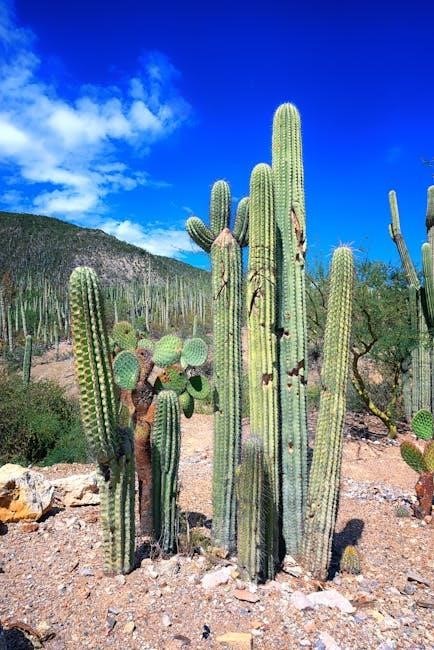
Detailed PDF guides categorize Dry (B) climates based on aridity, defining them by potential evapotranspiration exceeding precipitation. These climates are further divided into desert (BW) and steppe (BS) types, with subdivisions indicating temperature characteristics – hot (h) or cold (k).
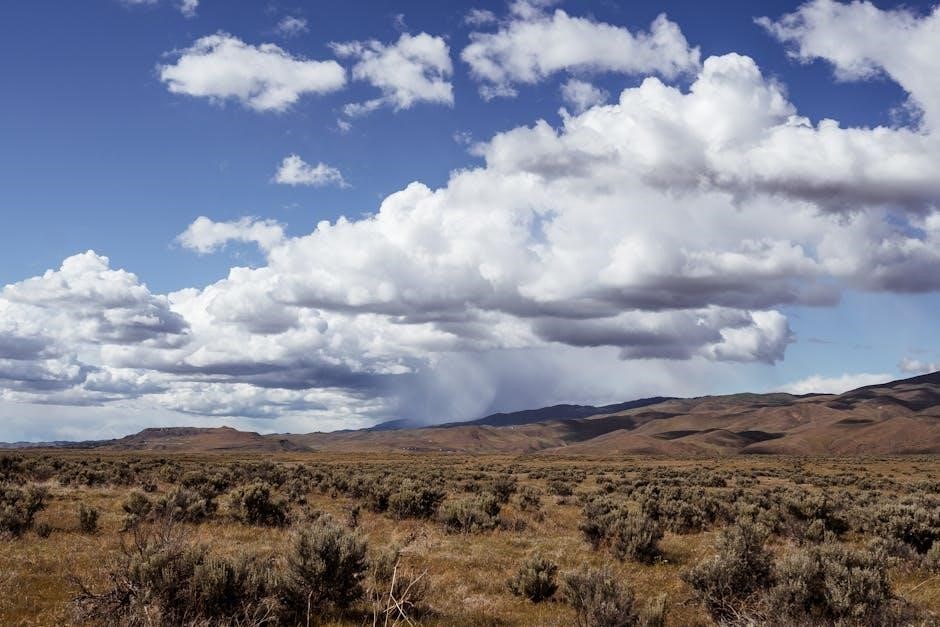
These PDF resources showcase maps illustrating the global distribution of these arid regions. They explain how limited moisture impacts vegetation, resulting in sparse plant life adapted to extreme conditions. The documents also cover the challenges faced by inhabitants and the unique adaptations of desert ecosystems.
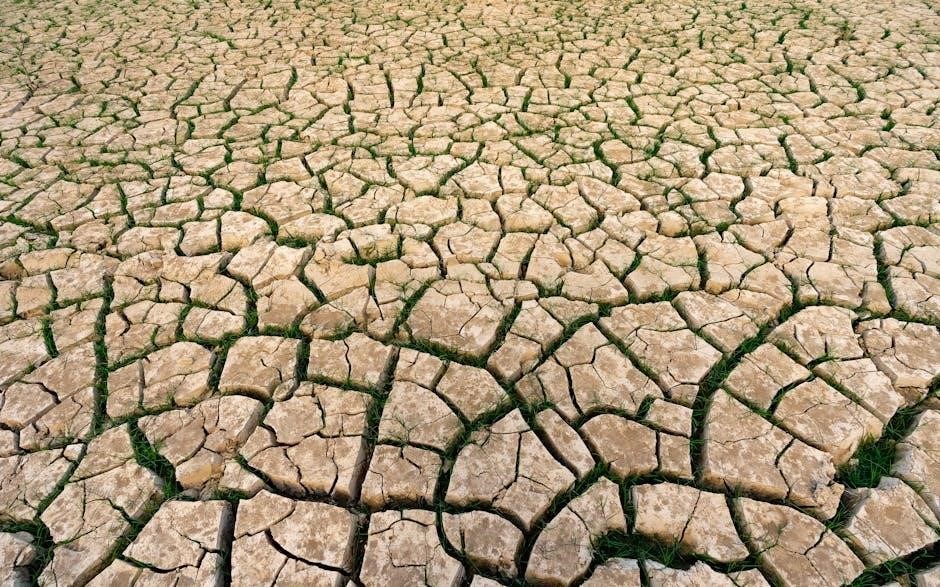
BWh ⎯ Hot Desert Climate
Comprehensive PDF documents define BWh climates as extremely arid, with mean annual temperatures exceeding 18°C (64°F). Rainfall is scarce, typically less than 250mm (10 inches) annually, and evaporation rates are very high.
These PDF resources detail the geographical distribution, often found near 30° latitude, and highlight the intense solar radiation; They explain the limited vegetation, specialized animal life, and the challenges of human habitation in these harsh environments. Soil composition and infrequent, intense rainfall events are also covered.
BWk — Cold Desert Climate
Detailed PDF guides classify BWk climates as arid regions with colder average temperatures. While precipitation remains low – under 250mm annually – the defining characteristic is a mean temperature of the warmest month below 10°C (50°F).
These PDF resources illustrate their location, often in rain shadows or at higher altitudes, and describe the presence of seasonal snowfall. Vegetation is sparse, adapted to cold and dry conditions, and animal life exhibits unique survival strategies. Soil characteristics and the impact of freezing temperatures are also explored within these documents.
BSh ⎯ Hot Steppe Climate
Comprehensive PDF documents define BSh climates as semi-arid regions bordering hot deserts. Precipitation, though higher than in deserts, remains insufficient to support substantial vegetation – typically between 250-500mm annually.
These PDF resources highlight the key feature: a mean temperature above 10°C (50°F) in the warmest month. They detail the presence of grasslands and shrublands, adapted to seasonal drought, and the impact on local ecosystems. Soil erosion and land degradation are often discussed, alongside human adaptations to this challenging environment, within these detailed guides.
BSk, Cold Steppe Climate
Detailed PDF guides characterize BSk climates as semi-arid regions with cold winters. Precipitation levels, similar to hot steppes (250-500mm annually), are insufficient for forest growth, fostering grasslands and shrublands. However, these climates experience significantly colder temperatures.
These PDF resources emphasize the crucial distinction: a mean temperature below 10°C (50°F) in the warmest month. They often illustrate the presence of permafrost in some areas and the impact of freezing temperatures on vegetation and soil. Human adaptations, including nomadic pastoralism, are frequently explored within these comprehensive climate analyses.
Temperate Climates (C)
Comprehensive PDF documents define Temperate (C) climates as zones with moderate temperatures and distinct seasons. These regions, situated between the tropics and polar areas, exhibit warm, humid summers and mild winters. Detailed charts within these resources showcase average temperature ranges and precipitation patterns.
PDF analyses further subdivide C climates into Csa (Mediterranean), Csb (Warm-Summer Mediterranean), and Cfa/Cfb/Cfc (Humid Subtropical/Oceanic). These classifications hinge on precipitation timing and temperature variations. Understanding these nuances, as presented in the guides, is crucial for regional ecological and agricultural assessments.
Csa — Mediterranean Climate
Detailed PDF guides characterize the Csa – Mediterranean climate as featuring hot, dry summers and mild, wet winters. These resources emphasize the influence of subtropical high-pressure systems during summer, suppressing rainfall. Temperature averages, meticulously documented in these files, reveal warm to hot summers and moderate winters.
PDF analyses highlight the prevalence of this climate around the Mediterranean Sea, California, and parts of Australia. Vegetation adaptations, like drought-resistant shrubs, are thoroughly explained. Understanding these characteristics, as presented in the guides, is vital for agricultural planning and wildfire risk assessment.
Csb — Warm-Summer Mediterranean Climate
Comprehensive PDF documents define the Csb – Warm-Summer Mediterranean climate as a variation of the Mediterranean type, distinguished by milder summers. These resources detail how summer temperatures rarely exceed 22°C (72°F), a key differentiating factor. Detailed temperature charts within the PDFs illustrate this characteristic.
These guides pinpoint locations like coastal California and parts of central Chile as prime examples. The PDFs emphasize the impact of cool ocean currents on moderating summer heat. Agricultural practices suited to this climate, alongside typical vegetation types, are thoroughly explored, offering valuable insights for regional studies.
Cfa — Humid Subtropical Climate
Detailed PDF guides classify Cfa – Humid Subtropical climates by hot, humid summers and mild winters, with no dry season. These resources highlight average temperatures exceeding 22°C (72°F) for at least four months. PDFs often include isotherm maps illustrating the geographical distribution of this climate type.
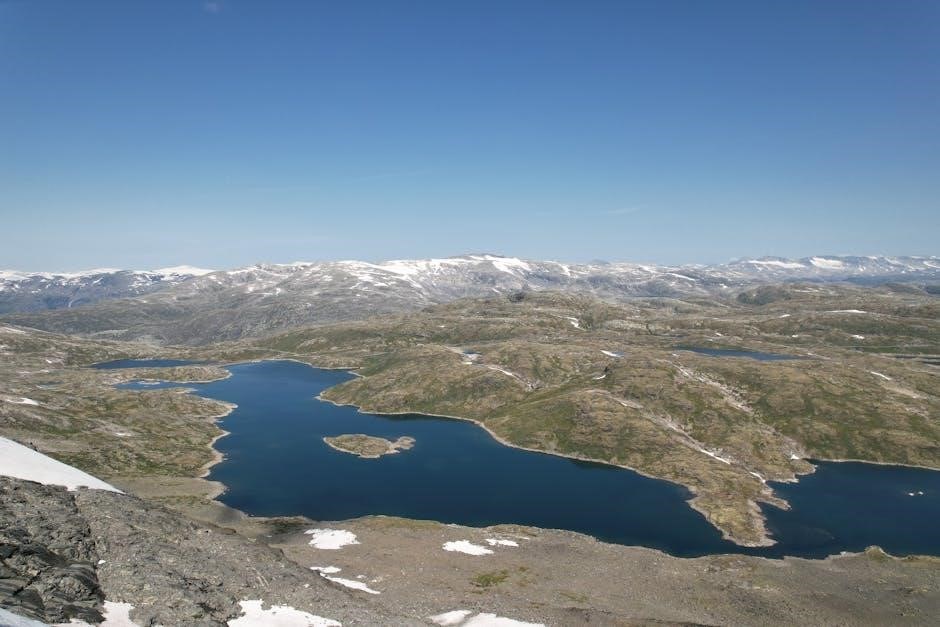
Southeastern United States, parts of South America, and eastern Asia exemplify this climate. The PDFs emphasize high precipitation levels throughout the year, supporting lush vegetation. Information on typical agricultural practices, like rice and tea cultivation, is frequently included, alongside discussions of potential hazards like hurricanes.
Cfb ⎯ Oceanic Climate
Comprehensive PDF documents define Cfb – Oceanic climates as having mild summers and cool, wet winters, influenced by proximity to oceans. These resources detail temperature ranges where average temperatures in the warmest month are below 22°C (72°F). PDFs showcase maps illustrating the distribution, primarily along western coasts of continents.
Western Europe, parts of the Pacific Northwest of North America, and New Zealand exhibit this climate. PDFs emphasize consistent precipitation throughout the year, fostering evergreen forests. Information on cloud cover frequency and moderate seasonal temperature variations are commonly found, alongside discussions of maritime influences.
Cfc — Subpolar Oceanic Climate
Detailed PDF guides classify Cfc climates as transitional zones between oceanic and polar regions, exhibiting cool summers and cold, wet winters. These resources highlight average temperatures in the warmest month below 15°C (59°F), differentiating them from typical oceanic climates. PDFs often include maps showing their limited distribution, primarily along narrow coastal strips.
Regions like coastal Alaska, parts of Norway, and the southern tips of South America exemplify this climate. PDFs emphasize frequent fog, high humidity, and substantial precipitation, supporting coniferous forests and tundra vegetation. Discussions on permafrost presence and shorter growing seasons are common within these documents.
Continental Climates (D)
Comprehensive PDF resources define Continental (D) climates by significant seasonal temperature variations, with warm to hot summers and cold, snowy winters. These guides detail how D climates are found primarily in the mid-latitudes of large landmasses, particularly in North America and Eurasia. PDFs often categorize them further into Dfa, Dfb, Dwa, and Dwb based on precipitation patterns.
Detailed charts within these PDFs illustrate the impact of distance from oceanic influences, leading to greater temperature extremes. Discussions cover the role of prevailing winds and the formation of air masses, influencing seasonal weather. Vegetation zones, like deciduous and boreal forests, are frequently mapped within these climate classifications.
Dfa ⎯ Humid Continental Climate, Hot Summer
Detailed PDF guides specify Dfa climates as having hot summers (average temperature exceeding 22°C) and cold, snowy winters. These resources highlight their location in eastern and central North America, and parts of eastern Europe and Asia. PDFs emphasize at least four months exceeding 10°C, differentiating them from other continental subtypes.
Climate maps within these PDFs showcase precipitation distributed throughout the year, supporting lush vegetation. Discussions cover the influence of prevailing westerly winds and frontal systems. These documents often include data tables illustrating average temperatures, precipitation levels, and humidity, crucial for understanding this climate type.
Dfb ⎯ Humid Continental Climate, Warm Summer
Comprehensive PDF documents define Dfb climates by warm (but not hot) summers, with average temperatures between 10°C and 22°C, and cold winters. These resources pinpoint locations like much of Western Europe, parts of Canada, and northern Asia. PDFs clarify that at least four months surpass 10°C, a key characteristic.
Detailed climate maps in these PDFs illustrate relatively even precipitation distribution. Discussions often cover the impact of latitude and proximity to large bodies of water. Data tables within these resources present average temperatures, precipitation, and humidity, aiding in a thorough understanding of this climate type’s nuances.
Dwa ⎯ Humid Continental Climate with Dry Winters, Hot Summer
Detailed PDF guides characterize Dwa climates with scorching summers – average temperatures exceeding 22°C – and distinctly dry winters. These resources highlight regions in Eastern Asia, notably parts of China and Korea, as prime examples. PDFs emphasize a significant temperature contrast between seasons.
Climate maps within these PDFs showcase a monsoon-like precipitation pattern: humid summers and arid winters. Data tables present average monthly temperatures and rainfall, crucial for analysis. Discussions often cover the influence of the Siberian High pressure system on winter dryness, as detailed in these comprehensive resources.
Dwb, Humid Continental Climate with Dry Winters, Warm Summer
Comprehensive PDF documents define Dwb climates as having warm summers – average temperatures between 22°C and less than that of Dwa – coupled with dry winters. These resources pinpoint locations in Eastern Europe and parts of Russia as typical examples, showcasing seasonal contrasts. PDFs often illustrate this climate’s transition zone.
Detailed climate maps within these PDFs reveal a precipitation pattern similar to Dwa, but with milder summer rainfall. Data tables present average monthly temperatures and precipitation levels. Discussions frequently address the impact of continental air masses, as explained in these detailed resources.
Polar Climates (E)
Numerous PDF guides detail Polar Climates (E), categorized as either Tundra (ET) or Ice Cap (EF). These resources emphasize extremely low temperatures and limited precipitation. PDFs often showcase maps illustrating the Arctic and Antarctic regions, highlighting the dominance of these climates.
Detailed PDF analyses explain that ET climates experience brief, cool summers allowing for some vegetation, while EF climates remain perpetually frozen. Data tables within these resources present average temperatures consistently below 10°C. Discussions frequently cover permafrost and its impact, as thoroughly documented in these comprehensive climate classification materials.
ET — Tundra Climate
Comprehensive PDF documents define the Tundra Climate (ET) as characterized by long, cold winters and short, cool summers. These resources highlight permafrost as a defining feature, restricting tree growth and impacting drainage. PDFs often include detailed maps showcasing the distribution of tundra across northern regions.
Analysis within these PDF guides reveals average temperatures above freezing for only a few months annually. Precipitation is generally low, primarily as snow. Data tables illustrate the limited growing season, supporting sparse vegetation like mosses and lichens, as thoroughly explained in these climate classification materials.
EF — Ice Cap Climate
Detailed PDF resources categorize the Ice Cap Climate (EF) as the coldest climate zone, perpetually covered in ice and snow. These documents emphasize that mean temperatures never exceed freezing, even during the warmest months. PDFs illustrate the limited geographical distribution, primarily encompassing Greenland and Antarctica.
Analysis within these PDF guides reveals extremely low precipitation levels, almost entirely in the form of snow. Vegetation is virtually nonexistent due to the harsh conditions. Data tables showcase consistently sub-zero temperatures, confirming the inhospitable nature of these polar regions, as thoroughly explained in these climate classification materials.
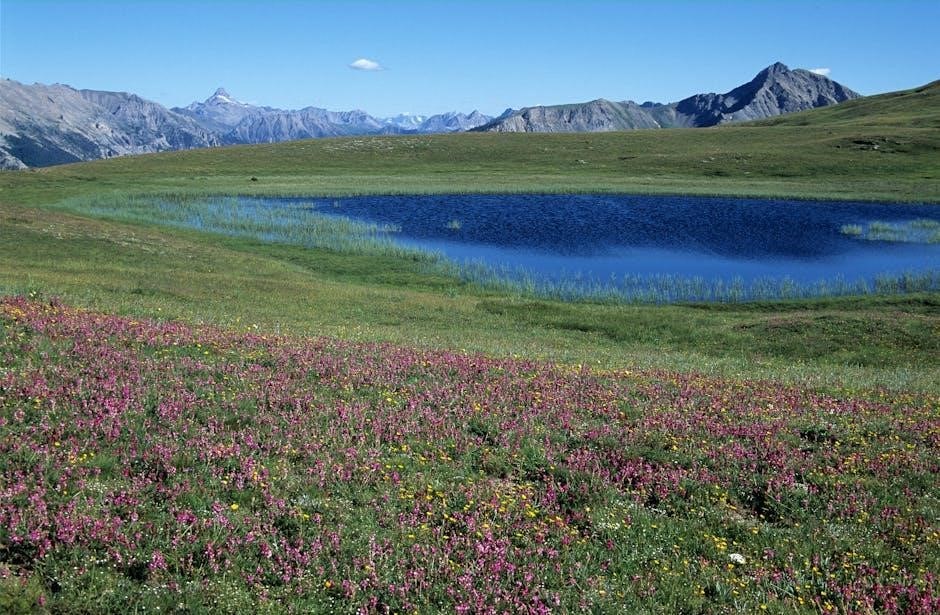
Using Köppen Climate Classification PDFs
Comprehensive PDF guides unlock the Köppen system’s complexities. They provide detailed climate maps and data tables, aiding in understanding global climate patterns and regional variations.
Interpreting Climate Maps
Köppen climate maps, often found in PDF format, utilize color-coding to represent different climate zones. Understanding these colors is crucial; for example, reds often indicate hot, arid regions, while greens signify lush, tropical environments.
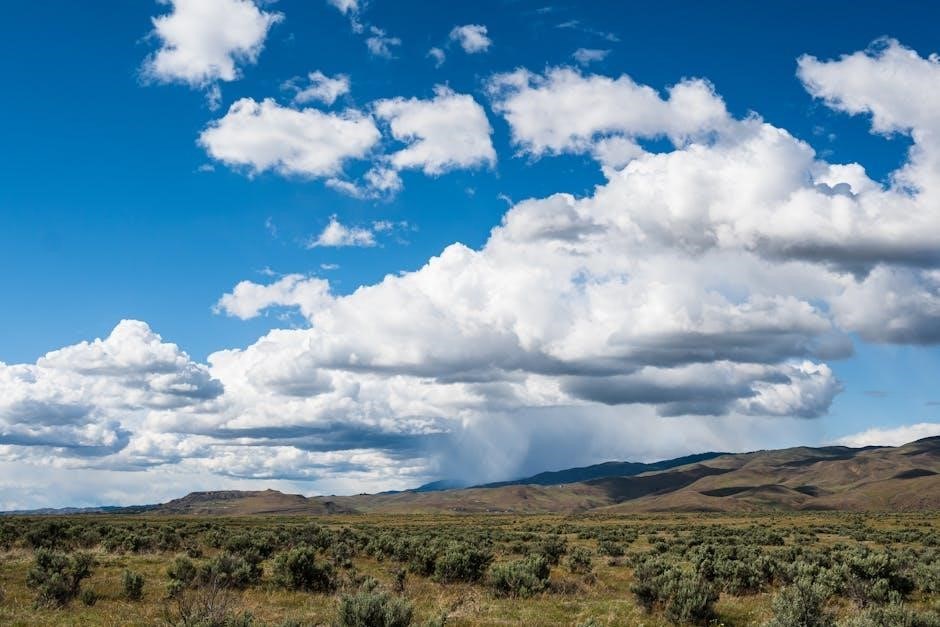
These maps aren’t just visual guides; they’re based on decades of collected climate data. Pay attention to boundaries between zones – these represent transitional areas with mixed characteristics. PDF resources frequently include legends explaining the specific criteria used to define each climate type, detailing temperature ranges and precipitation levels.
Furthermore, consider the map’s scale and projection, as these can influence the perceived size and shape of climate zones. Analyzing these maps alongside data tables provides a holistic understanding of global climate distribution.
Understanding Climate Data Tables
PDF documents detailing the Köppen classification often include climate data tables. These tables present average temperature and precipitation values for specific locations, crucial for determining the dominant climate type. Look for key metrics like the warmest and coldest month averages, and total annual precipitation.
Understanding the thresholds used in the Köppen system is vital. For instance, a location needs a specific amount of precipitation to qualify as a ‘f’ climate. PDF guides will clearly define these thresholds.
Pay attention to the units used (Celsius or Fahrenheit, millimeters or inches) and the time period over which the data was collected. Analyzing these tables alongside climate maps enhances comprehension.
Limitations of the Köppen System
While widely used, the Köppen climate classification, as detailed in many PDF resources, isn’t without limitations. It primarily focuses on temperature and precipitation, neglecting other significant factors like humidity, sunshine duration, and wind patterns. This simplification can lead to inaccuracies in certain regions.
PDF guides often acknowledge that boundaries between climate zones aren’t always sharp, creating ambiguity. Furthermore, the system was originally designed for terrestrial climates and may not perfectly apply to oceanic or high-altitude environments.
Microclimates and localized variations aren’t fully captured, and the system doesn’t account for climate change impacts.
Applications of the Köppen Climate Classification
PDF documents showcase its use in agriculture, ecology, and urban planning, aiding decisions about land use and infrastructure development globally.
Agriculture and Land Use
Detailed PDF guides demonstrate how the Köppen classification directly informs agricultural practices. Understanding a region’s climate type – whether tropical, dry, or temperate – dictates suitable crop selection and irrigation strategies. For instance, areas classified as ‘Aw’ (Tropical Savanna) require drought-resistant crops and careful water management.
Furthermore, the system aids in assessing land suitability for various agricultural purposes, preventing unsustainable practices. PDF resources often include maps illustrating optimal zones for specific crops based on Köppen climate zones, promoting efficient land utilization and maximizing yields. This knowledge is crucial for food security and sustainable agricultural development worldwide.
Ecology and Biomes
Comprehensive PDF documents reveal a strong correlation between Köppen climate zones and the distribution of global biomes. Each climate type – from rainforests (Af) to tundra (ET) – supports unique ecosystems and plant/animal communities. These resources detail how temperature and precipitation patterns, as defined by the Köppen system, shape biodiversity.
Analyzing PDF maps allows ecologists to predict species distribution and understand the impact of climate change on ecosystems. The classification aids in conservation efforts by identifying vulnerable biomes and prioritizing areas for protection. It’s a fundamental tool for ecological research and environmental management.
Urban Planning and Infrastructure
Detailed PDF guides demonstrate how the Köppen climate classification informs urban development. Understanding a region’s climate – derived from these resources – is crucial for designing resilient infrastructure. This includes building materials, drainage systems, and energy-efficient buildings suited to local conditions.
PDF analyses help planners mitigate climate-related risks like flooding, heat waves, and extreme weather events. The classification aids in zoning regulations, green space planning, and sustainable urban design. It ensures cities are adapted to their specific climate, enhancing livability and reducing environmental impact.
No Responses